About Me
My Journey
I’m still learning what it means to be a great engineer, but one thing’s certain: I love learning about what machine learning and software can do for the world. Whether it’s testing a new algorithm or staring up at a clear night sky, I’m always looking for patterns and possibilities.
I believe the best technology doesn’t just work, it feels right too. I’m drawn to tools and systems that are intuitive, human-centered, and built to solve real problems. For me, engineering is as much about curiosity and exploration as it is about intention.
Quick Facts
Technologies & Skills
What Drives Me
AI & ML
Creating intelligent tools and systems
Software Dev.
Scalable and meaningful applications
Continuous Learning
Always learning more
Problem Solving
Creative solutions and collaboration
Teaching & Mentorship
Helping others grow while growing myself
Coffee
A true blessing from God
Featured Projects

No model libraries. No shortcuts. I built every piece of a GPT by hand, from the tokenizer to multi-head attention to autoregressive decoding, then trained it on my own CPU using the first six chapters of Winnie the Pooh. The result sounds a lot like Pooh himself, which was exactly the point.
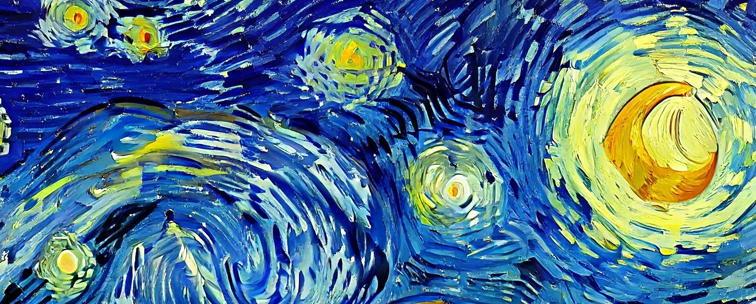
Ever wondered what your photos would look like hanging in a museum? I built a desktop app that blends any photo with any painting, transferring the artist's texture and color onto your image in seconds. You don't need to know a thing about AI to start creating.
Ask a question in plain English, get working SQL back. I fine-tuned Meta's LLaMA-2-7B to translate the way people actually talk into the queries a database understands. LoRA and 4-bit quantization made training a 7 billion parameter model possible on a single free Colab T4.


Same puzzle, four ways to solve it. I built an 8-puzzle solver in Python that pits Uniform Cost Search against three A* heuristics and counts the work each one does, turning an abstract question about heuristics into hard numbers you can compare.

Inspired by people close to me who see color differently, we built Pixelate: a pixel-art editor with accessibility at its core. Real-time filters for the three most common types of colorblindness, an AI assistant named Pixi, and a public gallery to share your work.